

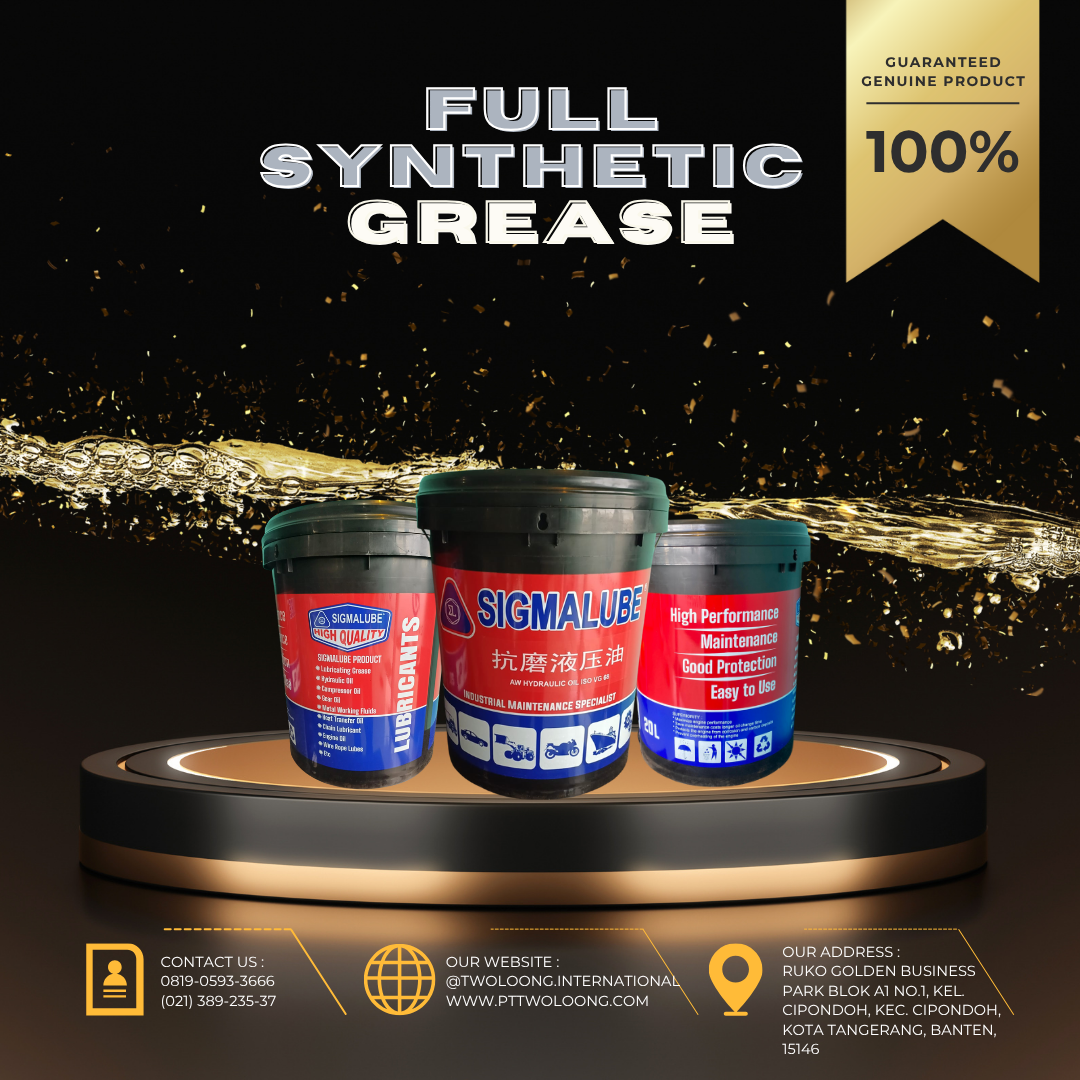
Full Synthetic Grease Original Twoloong International
Grease is a semi-solid lubricant used to reduce friction and wear on moving engine components. Grease consists of a mixture of base oil, thickener, and additives. This thickener gives grease its thick texture, unlike liquid lubricants like oil.
Functions of Grease:
Reduces Friction:
Grease serves to lubricate rubbing surfaces, thereby reducing friction and wear.
Prevents Wear:
By reducing friction, grease helps prevent wear on engine components.
Protects Against Rust and Corrosion:
Grease can help protect engine components from rust and corrosion.
Withstands Heavy Loads:
Some types of grease are designed to withstand heavy loads and high pressures.
Seals Gaps:
Grease can also be used to seal gaps in engine components, preventing the entry of dust, water, and other contaminants.
Types of Grease:
Lithium grease: Commonly used in a variety of applications due to its thermal stability and ability to withstand heavy loads.
Calcium grease: Suitable for applications requiring lubrication at moderate temperatures and high humidity.
Chassis grease: Designed to lubricate components in a vehicle’s chassis, such as suspension and steering.
Wheel bearing grease: Used to lubricate wheel bearings.
Multipurpose grease: Grease that can be used for a variety of applications.
Differences between grease and oil:
Formation: Oil is a liquid lubricant, while grease is a semi-solid lubricant.
Application: Oil is better suited for lubricating areas that require circulation, while grease is better suited for areas that require permanent lubrication and protection from contaminants.
Durability: Grease is generally more durable and less likely to be washed away by water than oil.
How to choose the right grease:
Determine the application:
Consider the type of component to be lubricated and its operating conditions (temperature, load, speed).
Consider the type of thickener:
Choose the type of thickener that suits the application’s needs.
Consider specifications:
Pay attention to grease specifications, such as NLGI grade, pour point, and flash point.
Consult an expert:
When in doubt, consult a lubricant expert or mechanic for proper recommendations.